
Muscle: The Organ We Forgot to Care For
For a very long time, skeletal muscles were seen as simple workers of the body. They helped us walk, lift, bend, and move. Once that job was done, we rarely thought about them again.
But over the last few years, science has taught us something important — muscles are not just for movement. They are active, powerful tissue that quietly protect our heart, support our brain, and keep our body strong as we grow older.
Most of us don’t realize this until we start feeling weak, tired, or achy. And by then, muscle loss has already begun.
How Muscles Help the Heart Stay Healthy
Every time you move your body — whether it’s walking, climbing stairs, or lifting a weight — your muscles send out helpful signals into the bloodstream. These signals help reduce inflammation, improve blood flow, and support healthy sugar and fat levels.
This is why people with better muscle strength often have healthier hearts, even if their weight doesn’t change much. Strong muscles reduce the load on the heart and help the body use energy more efficiently.
Muscle and Metabolic Health: The Missing Link
Muscles play a major role in how your body handles sugar, fat, and energy. After every meal, muscles act like a sponge — they take up sugar from the blood and use it for energy. When muscle mass is low, sugar stays longer in the blood, increasing the risk of insulin resistance and diabetes.
This is one of the reasons why many Indians develop diabetes even without being very overweight. It is not just about how much fat you have — it is also about how much muscle you have.
Building and preserving muscle improves sugar control, boosts metabolism, and reduces fat accumulation around the belly. This makes muscle health one of the most powerful tools for preventing diabetes and other lifestyle diseases.
The Quiet Connection Between Muscles and the Brain
Have you ever noticed that you feel calmer and clearer after some physical activity? That’s not a coincidence.
When muscles work, they communicate with the brain. This communication improves mood, reduces stress, and helps with memory and focus. Regular movement has been shown to protect the brain as we age and lower the risk of low mood and mental fatigue.
So when we talk about exercise, we’re not just talking about the body. We’re talking about mental well-being too.
Why Muscle Health Is a Bigger Issue for Indians
Here is something important that many people in India don’t know.
Indians naturally tend to have less muscle and more body fat, even if their weight looks “normal.” This is often called the thin–fat body type. You may look fine on the outside, but inside, muscle levels may be low.
This is one of the reasons why Indians develop diabetes, heart disease, and weakness at a younger age compared to many other populations. Even people who are overweight can have poor muscle strength hidden under body fat.
Understanding Muscle Loss (Sarcopenia) in Simple Terms
Muscle loss with age is called sarcopenia, and it starts much earlier than most people think — sometimes as early as the 30s.
It shows up as:
• Getting tired easily
• Difficulty climbing stairs
• Weak grip strength
• Poor balance
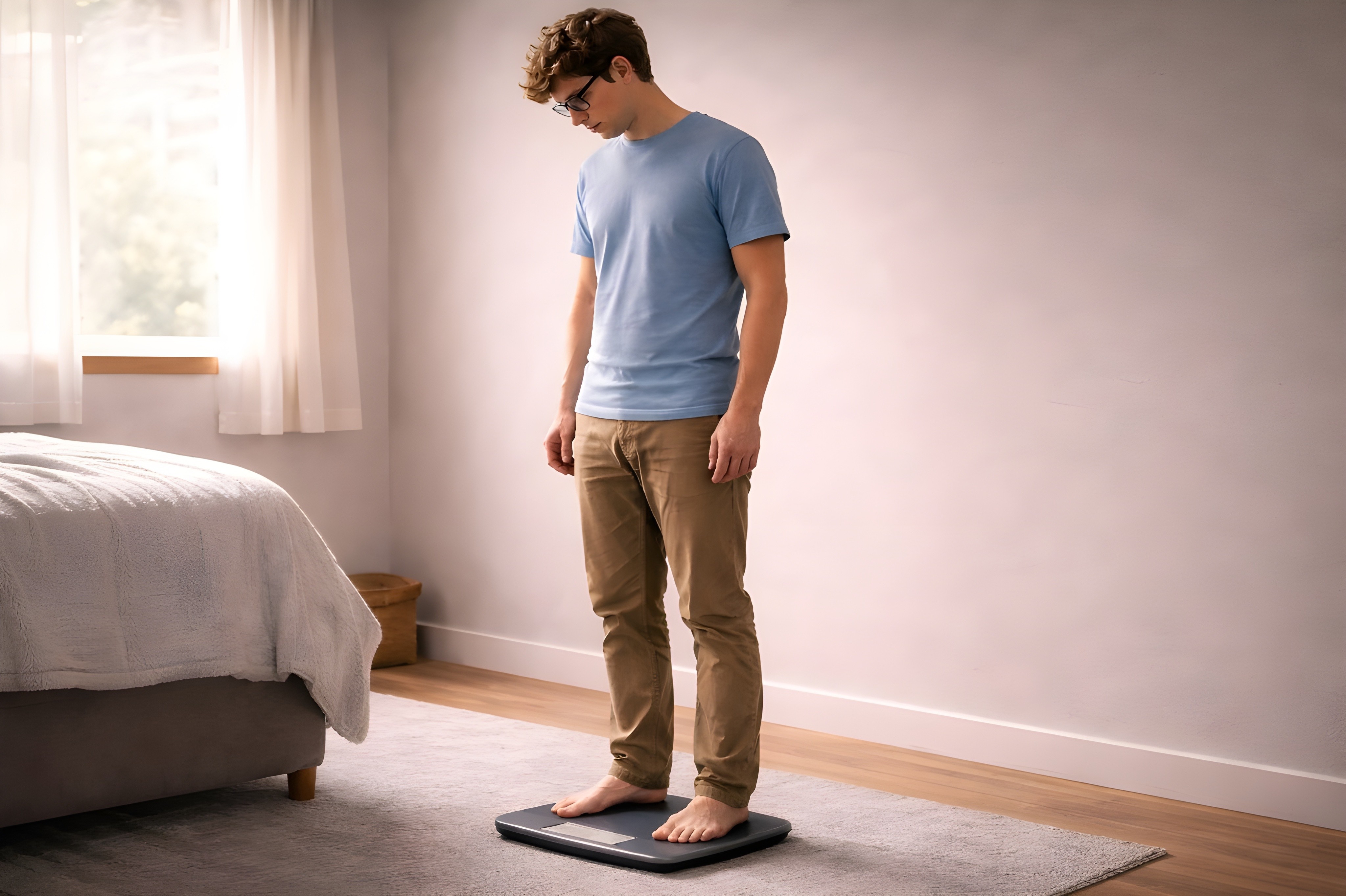
Indian studies have shown that muscle loss is very common, especially in women and older adults. Many people don’t realise they are losing muscle because the weighing scale doesn’t show it.
Why Weight Loss Alone Is Not Enough
This is where many people go wrong.
When we focus only on losing weight, through dieting or excessive cardio, we often lose muscle along with fat. In Indians, this happens even faster.
So you may lose kilos, but you also lose strength. Over time, this makes metabolism slower and increases health risks.
The real goal should be losing fat while protecting muscle.
Why Strength Training Matters So Much
Strength training doesn’t mean heavy gym workouts or body building. It simply means asking your muscles to work against resistance, using weights, resistance bands, or even your own body weight.
This kind of movement tells your body: “We need these muscles. Don’t break them down.”
With regular strength training:
• Muscles stay strong
• Blood sugar control improves
• Bones become stronger
• Balance and posture improve
Even two or three sessions a week can make a meaningful difference.
Why Women Need to Be Extra Careful
Women naturally have less muscle than men, and after menopause, muscle loss speeds up. Many women also eat less protein and avoid strength training because of fear of “bulking up.”
In reality, avoiding strength training increases the risk of weakness, bone loss, and joint problems later in life.
For women, building and maintaining muscle is not about appearance — it’s about long-term independence and health.
The Most Encouraging Part: It is Never Too Late.
The good news is Muscle can be built at any age.
You don’t need to be fit to start.
You don’t need perfection, just consistency.
Small, regular efforts matter more than intense, short-term plans.
A Message from Lyxaa Clinic
At Lyxaa Health Optimisation Centre , we believe health is not about chasing a number on the scale. It is about building a body that supports you — your heart, your mind, and your daily life. We have a dedicated activity zone and EMS ( Electrical Muscle Stimulation) focused on building and preserving muscle health. We are committed to providing customised training sessions designed jointly by our health coaches and doctors, ensuring that movement plans are safe, personalised, and aligned with each individual’s health needs and life stage.
Your muscles are not just helping you move today.
They are protecting your future.
And the best time to start caring for them is now.
References
Bhasin S, et al.
Indian expert consensus on diagnosis and management of sarcopenia.
Journal of the Association of Physicians of India. 2024.
PubMed ID: 40165836
Longitudinal Aging Study in India (LASI).
Prevalence and determinants of sarcopenia among older adults in India.
National report and secondary analyses.
PubMed ID: 39887986
Srikanthan P, Karlamangla AS.
Relative muscle mass is inversely associated with insulin resistance and prediabetes.
Journal of Clinical Endocrinology & Metabolism. 2011;96(9):2898–2903.
Park SW, et al.
Sarcopenia is associated with insulin resistance and metabolic syndrome.
Diabetes Care. 2009;32(8):1495–1500.
Pedersen BK, Febbraio MA.
Muscles, exercise and myokines.
Physiological Reviews. 2012;92(4):1651–1697.
Kalyani RR, et al.
Age-related and sex-related differences in muscle mass and strength.
Endocrinology and Metabolism Clinics of North America. 2014;43(3):549–559.
Resistance Exercise Training in Individuals With and Without Cardiovascular Disease — AHA Scientific Statement.
PubMed ID: 38059362
Comparative Effectiveness of Aerobic, Resistance, and Combined Training on Cardiovascular Risk Factors.
Available through PubMed Central.
Role of Resistance Training in Cardiac Rehabilitation.
PubMed entry.
Resistance Circuit Training Improves Blood Pressure and Cardiorespiratory Endurance.
Scientific Reports.