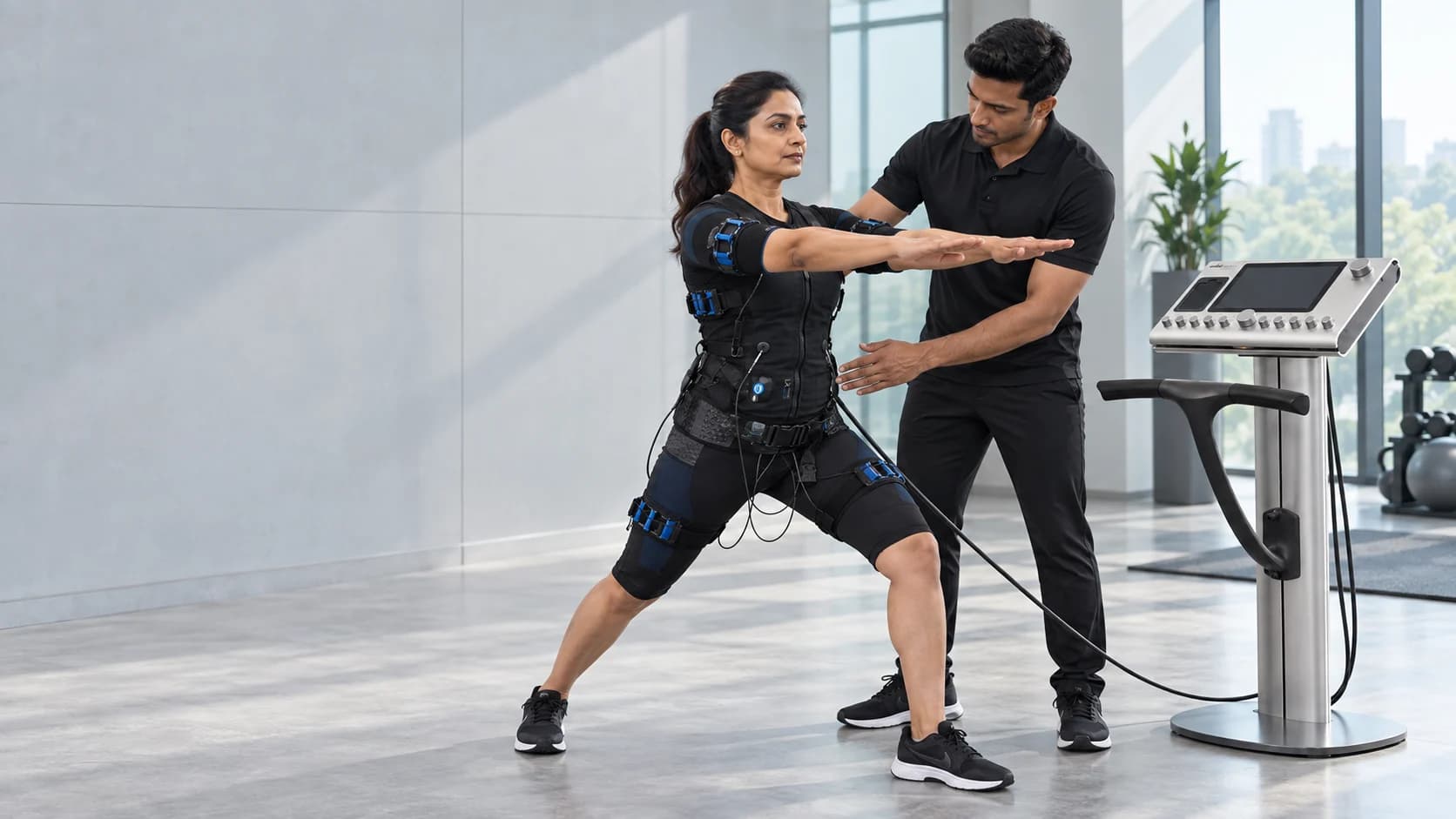
Begin with the barrier
Some people are new to strength work. Others stopped because of time, uncertainty, illness or a long break. Naming that barrier helps the trainer choose a starting point that the person can repeat.
Pain, unexplained weakness, recent surgery or a rehabilitation need may point to clinical assessment before training. The goal is to choose the right route, not to place every person into EMS.
Learn the sensation and the movement
The first exposure uses simple movements and conservative settings. The trainer explains what to expect, watches control and asks for feedback throughout the active block.
A beginner does not need to prove fitness in the first session. Clear communication and a comfortable introduction create the information needed for the next step.
Progress from response
The next appointment reflects how the person moved, felt and recovered. Exercise, pace and stimulation can stay steady or change independently rather than rising on an automatic schedule.
This makes progression visible without turning stronger stimulation into the objective. Consistency and usable capacity matter more than one exhausting visit.
Build a wider active week
EMS mainly contributes coached muscular work. A complete routine can also include walking, aerobic activity, mobility, Pilates or conventional resistance training as confidence and capacity grow.
Lyxaa uses the first sessions to help establish a workable rhythm. The longer-term aim is regular movement that supports the person's health and life beyond the appointment.
- Start with a health-history and goal conversation
- Use movements that can be performed with control
- Leave enough time to assess recovery
- Add other activity according to the person's goals
SOURCES
Evidence used for this guide
Sources checked 10 October 2026. These references explain the topic; the first visit determines individual suitability.
International WB-EMS safety recommendationsSystematic review in non-athletic adults