The source of the challenge is different
In whole-body EMS, a fitted suit delivers electrical impulses while the participant performs active exercises. The trainer can adjust the stimulus for major muscle groups during the session.
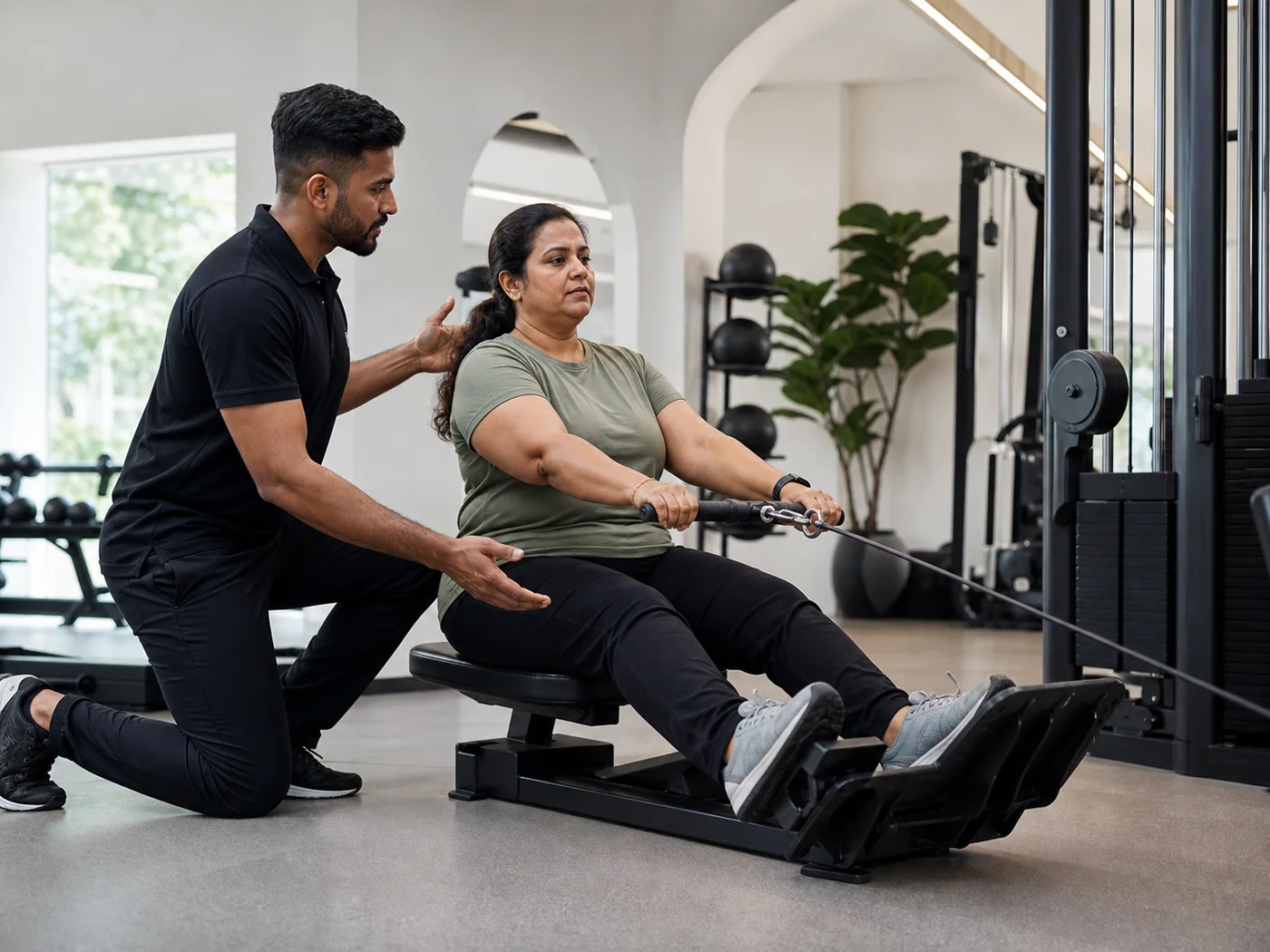
In a conventional gym workout, challenge usually comes from body weight, machines, free weights or bands. Progression can involve more load, repetitions, range, speed or exercise complexity. That also develops skill in handling external resistance.
Supervision and time
Lyxaa EMS sessions use one-to-one trainer supervision. The active training period is usually around 20 minutes, with additional time for screening, suit fitting and review. A gym visit may be self-directed or coached and can vary widely in length.
A compact appointment may be easier to schedule, but minutes alone do not measure the quality or completeness of a programme. Consistency, progression and recovery still matter.
What each format can contribute
The better choice depends on the goal, health history, preferences and access to appropriate supervision.
- EMS: compact, supervised muscular stimulus with individual channel settings
- Gym strength training: broad exercise variety and clear progression with external load
- Walking and cardio: daily movement and aerobic capacity
- Pilates and mobility: control, coordination and usable range
You can combine them
EMS does not need to compete with every gym session. An already active person may use it as one supervised strength exposure within a wider week. A beginner may use the trainer-guided format as a structured starting point before expanding activity.
Avoid claims that 20 minutes of EMS replaces several hours of all other exercise. Choose the format you can perform safely and consistently, then keep the rest of the week aligned with the adaptations you want.
SOURCES
Evidence used for this guide
Sources checked 10 October 2026. These references explain the topic; the first visit determines individual suitability.
Systematic review of WB-EMS outcomesInternational WB-EMS position statement