Control through movement
Build trunk, hip and shoulder control so your body stays organised while your limbs move freely.
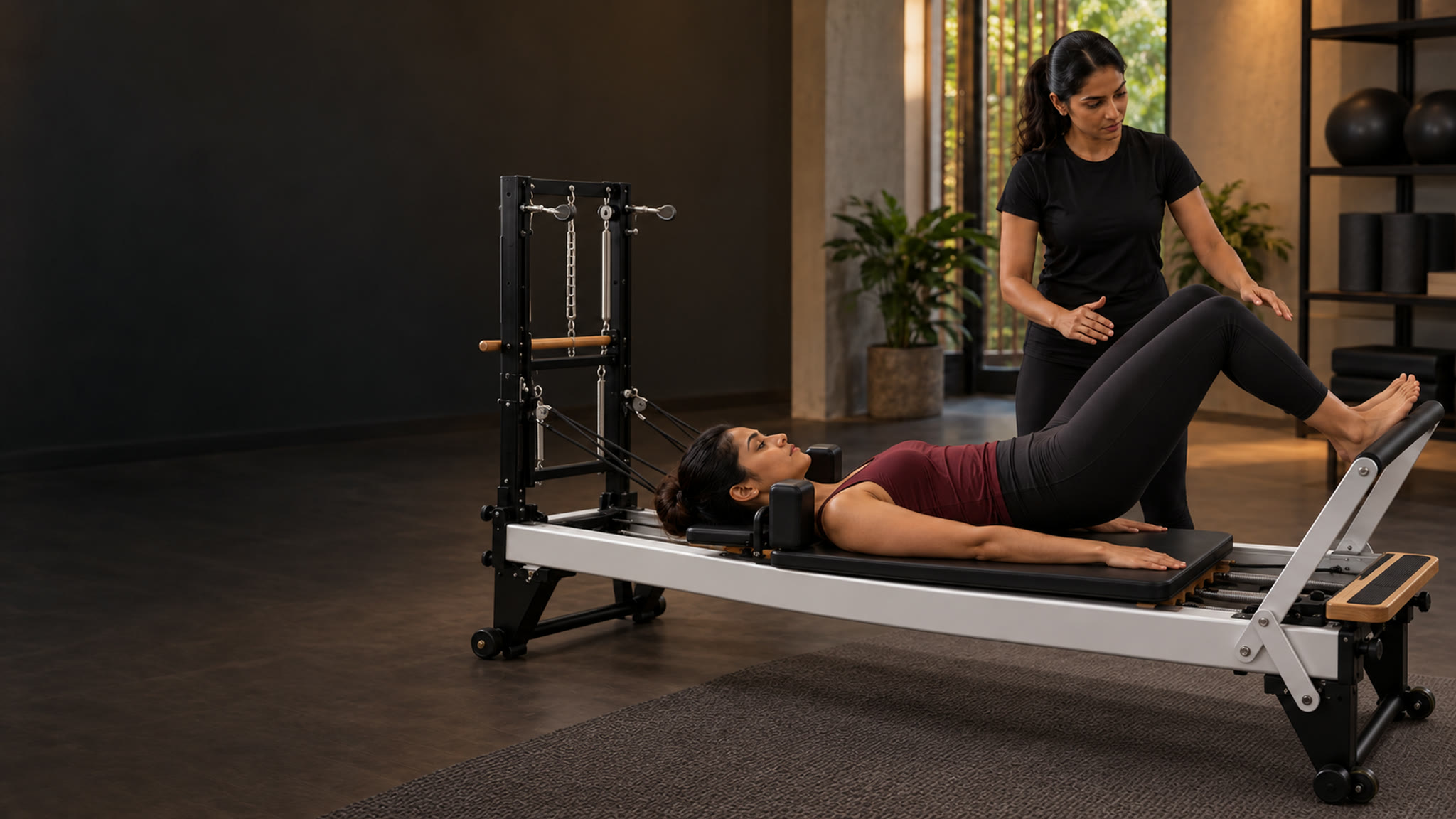
Coming soon · Private sessions
Private Pilates for adult dancers who want stronger movement, usable mobility, steadier balance and better recovery around classes, rehearsals and performance. It supports your dance practice; it does not teach dance.
Private
guided sessions
Strength, mobility
and balance
Recovery around
your dance week
Built around dancers
Your teacher leads technique, repertoire and performance. Pilates adds focused conditioning for the strength, mobility, balance and body awareness that help you move with more control and manage a demanding week.
What Pilates can support
The session is shaped around your body, your dance form and the demands of your current week. The aim is practical: move well, build capacity and recover without competing with dance training.
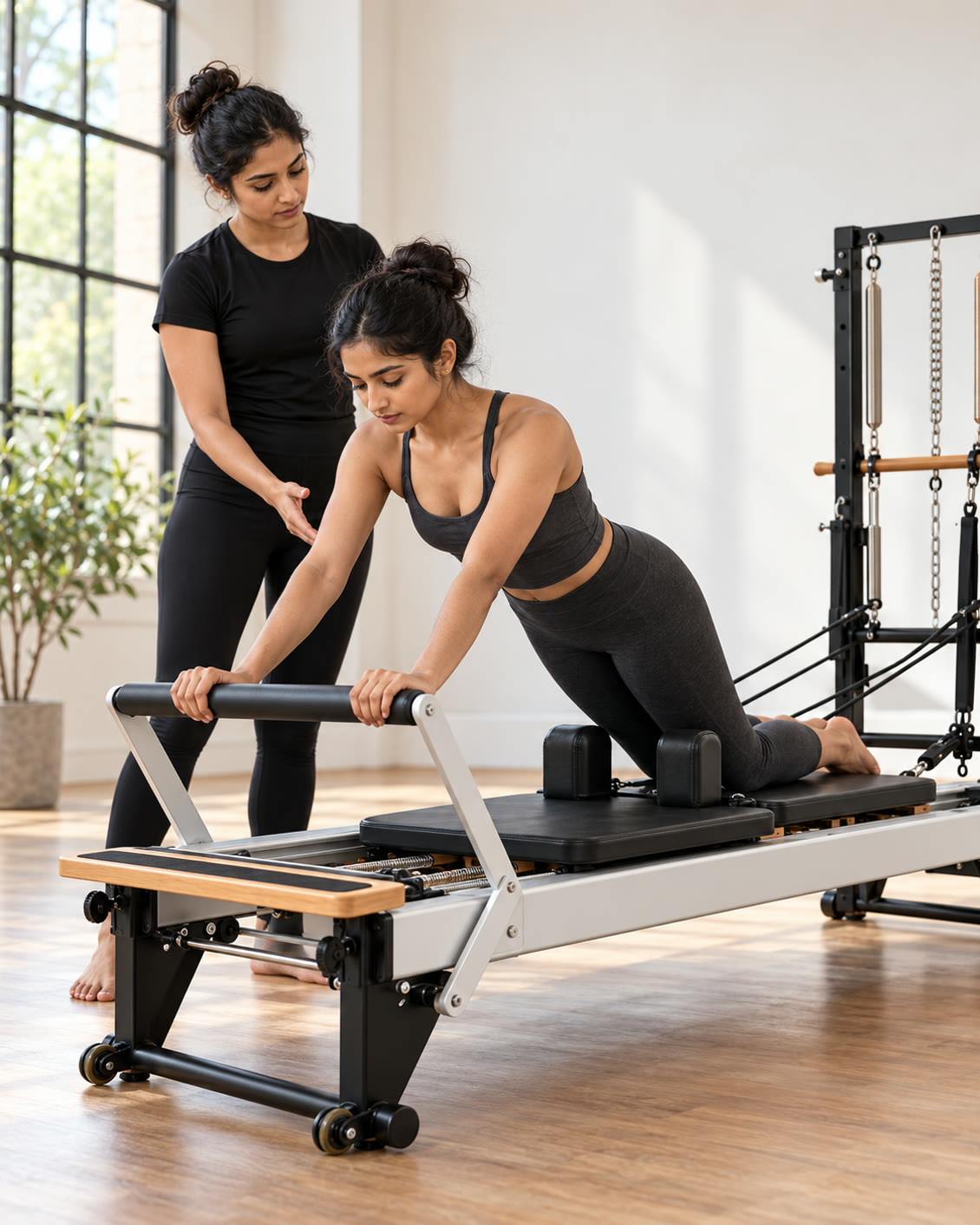
Build trunk, hip and shoulder control so your body stays organised while your limbs move freely.
Work through available range with support, control and strength instead of chasing flexibility alone.
Adjust the session around rehearsal load, fatigue and performance dates so training stays useful.
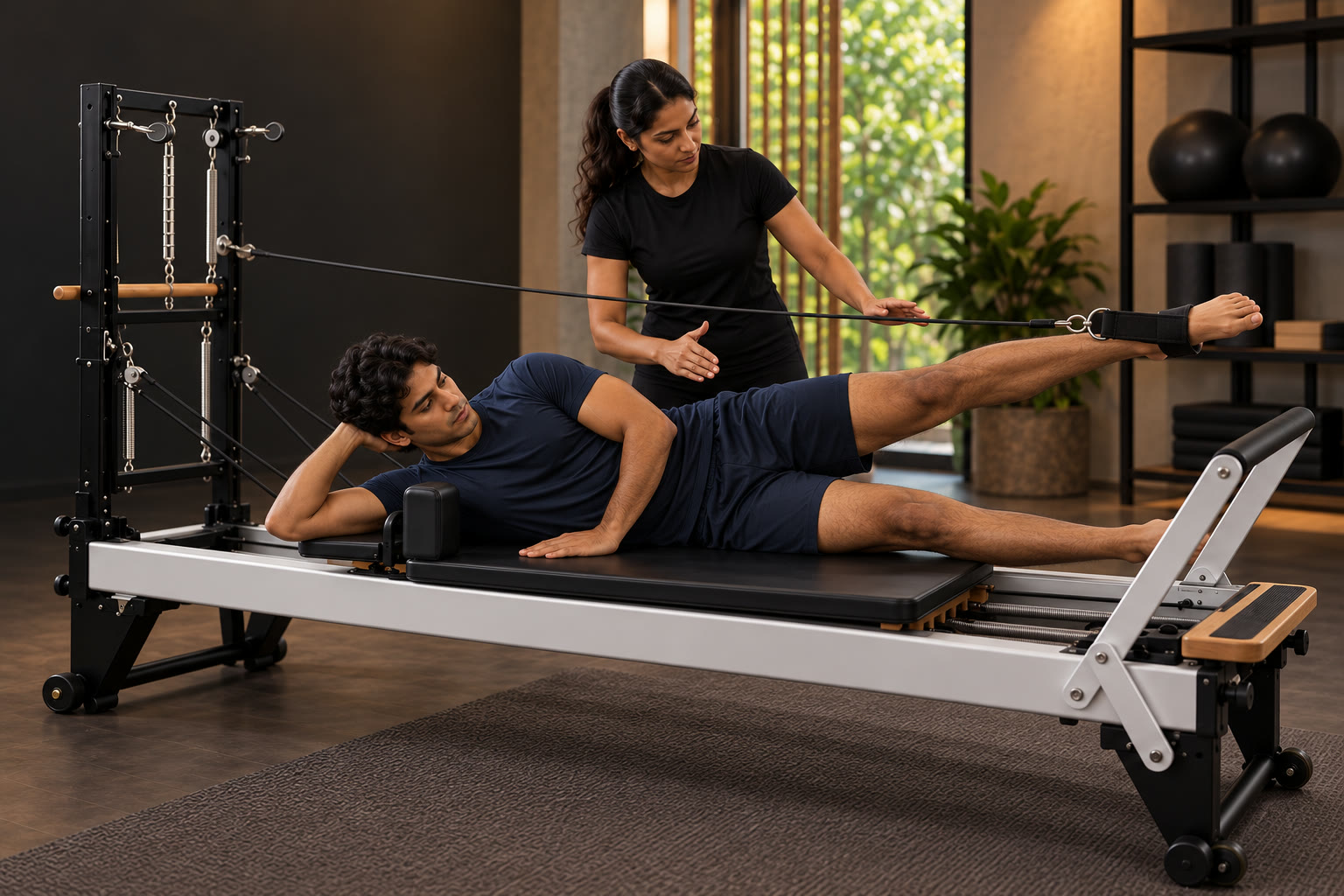
Around the rehearsal calendar
Pick a moment in the performance cycle. Watch the session change with it.
A regular week has the most room to build: progressive strength, balanced control, movement outside the patterns you repeat every day in the studio.
Dance form matters
Built for adult dancers. We'll only confirm a place where it genuinely fits your form and your needs.
Whether you train in Bharatanatyam, Mohiniyattam or Kathakali, we talk through your adavus, footwork, aramandi holds, gesture and weekly rehearsal load — then build the hip, ankle and postural control that practice demands. Your guru stays responsible for technique.
We build the control to move between levels, absorb floor contact safely, and organise the trunk through off-centre, weight-sharing, improvised choreography. Transitions that feel supported, not risky.
Sessions work with the turnout, line and balance you have — building the strength to hold a position, not just reach it. This service doesn't assess pointe readiness or teach technique.
How it begins
No exercise list comes from the dance form alone.
Listen
Dance form, experience, class and rehearsal hours, performance dates, other training. Any current symptoms — identified before movement begins.
Observe
Simple, controlled movements — to see how you balance, coordinate and manage range. Not a diagnosis. Not an audition.
Adapt
Support, resistance and complexity, adjusted to you and to the day — building capacity on strong weeks, easing load on recovery weeks. The work sits beside rehearsal. It doesn't compete with it.
Evidence, without overclaiming
Reviews of supplemental training in dancers report real gains in strength, control and movement quality — the physical qualities behind performance, day to day. What they don't support is a guarantee against injury. Evidence for reducing dance injuries specifically is limited and mixed. So we won't promise prevention, or a rehabilitation outcome we can't back up.
Teaching quality, rehearsal load, sleep, nutrition, recovery, access to good healthcare — all still matter.
Evidence reviewed 7 September 2026. General information only; not medical advice.Choose the right service
Pilates for Dancers is for supplemental movement work. Pain, surgery or active rehabilitation changes the pathway.
General strength, mobility and a consistent private practice.
→02Pilates for AthletesMovement work shaped around sport training and competition.
→Strength, control and recovery shaped around rehearsal and performance.
CurrentPhysiotherapist-led support when symptoms or recovery change the start.
→Questions
The opening service is planned as private, in-person Pilates at Lyxaa in West Nadakkave, Kozhikode.
Pilates for dancers is private, instructor-led conditioning built around what your body actually does on stage: core and pelvic control, balance on a small base, ankle and foot strength for landings, and the muscular endurance to hold a line when you're tired. The result: steadier landings, a cleaner line, and a body that holds up across a full season. It runs alongside your dance training, adding the strength, alignment and control behind your technique, and the recovery capacity that carries you between rehearsals and performances. Lyxaa plans private, one-to-one sessions in Kozhikode, for adult classical and contemporary dancers, shaped around your dance form and rehearsal load — not choreography.
Usually the goal isn't more range — it's control of the range you already have. For a flexible dancer, that often means strength at end-range, balance with graduated support, and trunk-and-limb coordination — so extra flexibility becomes a cleaner line, not instability. Pain, joint instability or a suspected injury needs a clinical assessment, not more stretching.
Fees will be confirmed when the service opens. Joining the list is a request for information — not a payment or a booking. Share your dance form and weekly practice, and the team will discuss whether it fits.
Stretching lengthens tissue. Pilates builds the strength and control to use that length. A session builds control through the trunk, hips, ankles and shoulders, so you can move through range with strength and support. Not just reach further.
Yes — talk through your dance form, weekly practice and performance demands with the team: adavus and footwork volume for classical dancers, floor work and transitions for contemporary. The instructor confirms it's a fit first. Your teacher or guru keeps guiding technique, repertoire and choreography.
It starts with your dance form, experience, rehearsal hours, performance dates and any current symptoms. Simple movements show the instructor your balance, coordination and control through range — before the exercises are adapted to build strength where you need it most. Not an audition. Not a diagnosis.
No. Your teacher or guru stays responsible for technique, repertoire and choreography. This is the conditioning underneath it.
Adult classical and contemporary dancers. We confirm suitability against the instructor's scope, your dance form and your needs, before sessions begin.
Yes — an arangetram is exactly the intensive rehearsal season this service is built around. Sessions can build the core, hip and ankle strength behind long adavu sequences, the endurance to hold a line through a multi-hour solo performance, and a controlled taper in the final weeks, so you arrive prepared, not depleted. Your guru continues to lead technique and repertoire.
No exercise service can guarantee that, and Lyxaa won't claim otherwise. What conditioning can realistically do: build the strength, control and body awareness behind a demanding schedule — steadier landings, better core and pelvic control, more even loading through the ankles, hips and lower back. One part of a wider plan, alongside good teaching, sensible load management and recovery.
Yes, within scope. After a run of performances, sessions shift toward easing fatigue and rebuilding capacity, not adding load. After an injury, your clinician and Lyxaa's Clinical Pilates lead the recovery itself. Once you're cleared for full training, Pilates for Dancers picks up the return-to-rehearsal conditioning.
Talk to your treating clinician about current pain, a recent injury, surgery or active rehabilitation. Lyxaa's Clinical Pilates — physiotherapist-led, built for exactly this stage — is usually the right pathway.
The opening list is for adults. A youth service — with its own consent and safeguarding process — hasn't been announced.
Opening list
Just the essentials. This is an opening notification and a suitability conversation — not a medical assessment, a booking or a payment.