What the current evidence supports
Studies report improvements in pain and function after supervised programmes for nonspecific chronic low-back pain. A 2025 review described promising results while also finding meaningful differences between protocols and participant groups.
This supports a considered, individual use of WB-EMS. Lyxaa focuses on the person's symptoms, function and response rather than applying one standard programme to every type of back pain.
Assessment comes before training
Back pain is a symptom with many possible causes. New or severe pain, pain after trauma, progressive weakness, numbness, bowel or bladder changes, fever, unexplained weight loss or pain that feels medically concerning needs prompt clinical assessment.
At Lyxaa, a doctor or physiotherapist-led Clinical Pilates pathway may be the better first step when diagnosis, rehabilitation or symptom management is the priority.
How an EMS session can be adapted
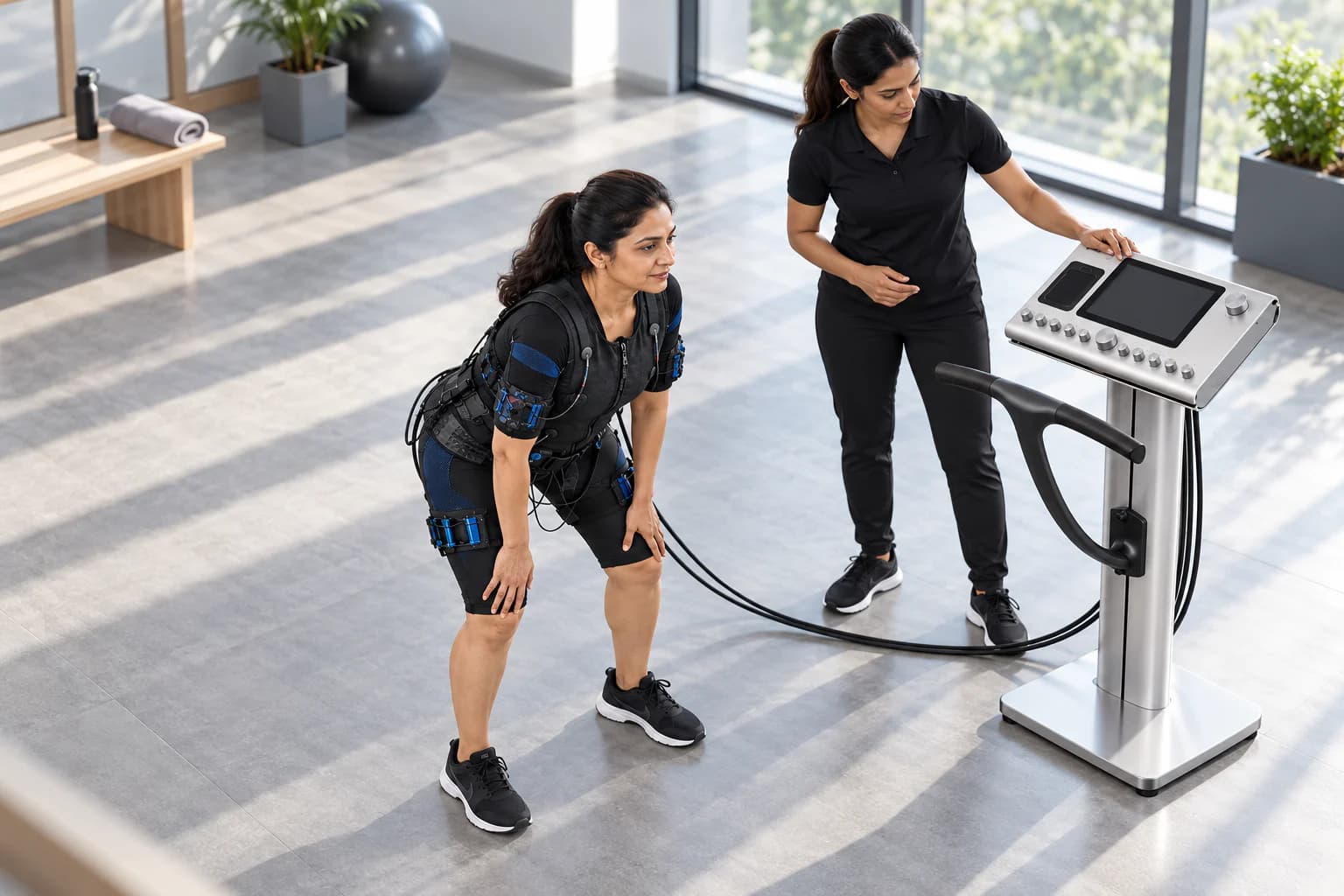
When the service is suitable, the trainer can choose simple movements and use modest external load while adjusting stimulation by muscle group. Feedback and movement quality guide the session.
Symptoms during and after training are reviewed so the next visit can progress, stay steady or change direction. That creates a service built around response rather than a fixed intensity target.
Build the wider recovery plan
Regular activity, sleep, work setup, stress, general strength and clinically indicated rehabilitation can all influence persistent back pain. EMS can contribute one coached strength component.
The practical goal is improved capacity and confidence over time. Lyxaa can connect the person with Clinical Pilates or medical guidance when those services better match the next step.
SOURCES
Evidence used for this guide
Sources checked 10 October 2026. These references explain the topic; the first visit determines individual suitability.
2025 systematic review of WB-EMS for nonspecific chronic low-back painEarlier systematic review of EMS for low-back pain