Muscular endurance
Repeated controlled work can challenge the trunk, legs, shoulders and arms.
Home/Pilates/Regular Pilates/Benefits
Evidence, without exaggeration
Pilates is a structured way to practise strength, mobility, balance and movement control. Research supports benefits in some of these areas, but it does not show that Pilates is always better than other well-designed exercise.
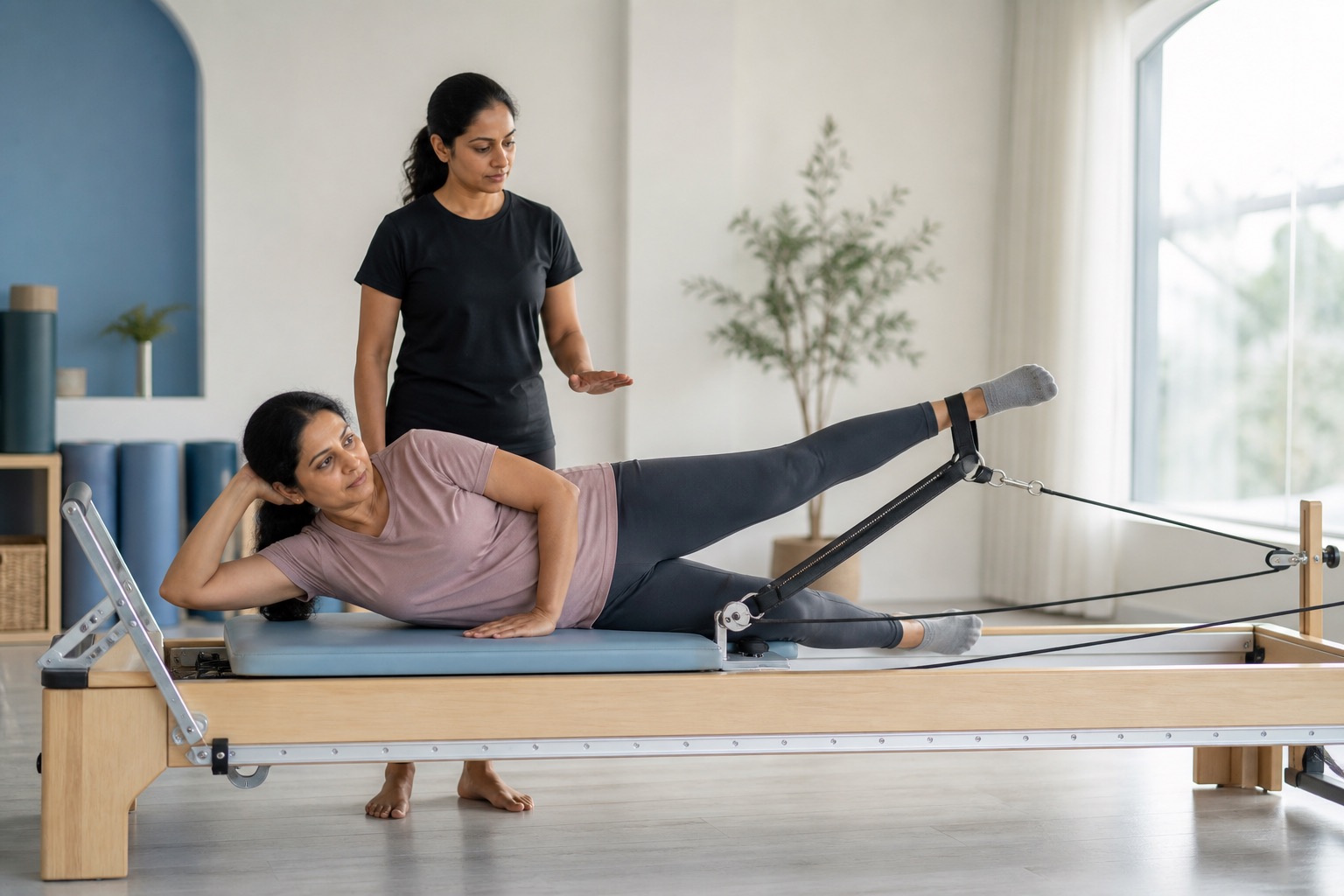
Pilates combines repeated movement with deliberate breathing, alignment and control. On a Reformer, spring resistance and the moving carriage provide feedback that can help an instructor scale an exercise up or down.
People often choose it because the session can train several qualities together without requiring high-impact movement. The exact result depends on the exercises selected, resistance, frequency, progression, health and what other activity you do.
Repeated controlled work can challenge the trunk, legs, shoulders and arms.
Movements can explore range while the apparatus provides adjustable support.
Changing bases of support can train steadiness during controlled movement.
Specific cues can help you notice position, effort, breathing and movement habits.
No form of exercise guarantees pain relief, weight loss, posture correction or protection from injury. Reviews comparing Pilates with other exercise frequently find that it may help, but is not clearly superior. The more useful question is whether the programme is safe, progressive and realistic enough for you to continue.
How to read the research
Pilates research varies in programme length, participant health, exercise type and comparison groups. That makes a single universal claim misleading.
An earlier review found evidence for flexibility, dynamic balance and muscular endurance, while noting weak study quality.
A later review found no clear superiority for strength, balance or flexibility over other exercise.
Cochrane found possible benefit versus minimal intervention, but no conclusive advantage over other exercise.
Choose by fit, safety, quality of instruction and your ability to continue, not inflated claims.
A responsible starting point
Strength, movement confidence, mobility and maintaining a regular exercise habit are more useful goals than vague promises to “tone everything.”
Resistance, range, complexity, speed and volume should not all increase at once. Progression should remain understandable.
Pain, dizziness, unusual breathlessness or feeling unwell are reasons to stop and reassess, not signs that the exercise is working.
Pregnancy, postpartum recovery, pain, injury, recent surgery or a relevant diagnosis may warrant Clinical Pilates or medical clearance first.
Related guides
Regular Pilates · Kozhikode
Private sessions make it easier to learn the equipment and adjust the work to your starting point.