Carriage
A sliding platform that asks you to control both effort and return.
Pilates equipment guide
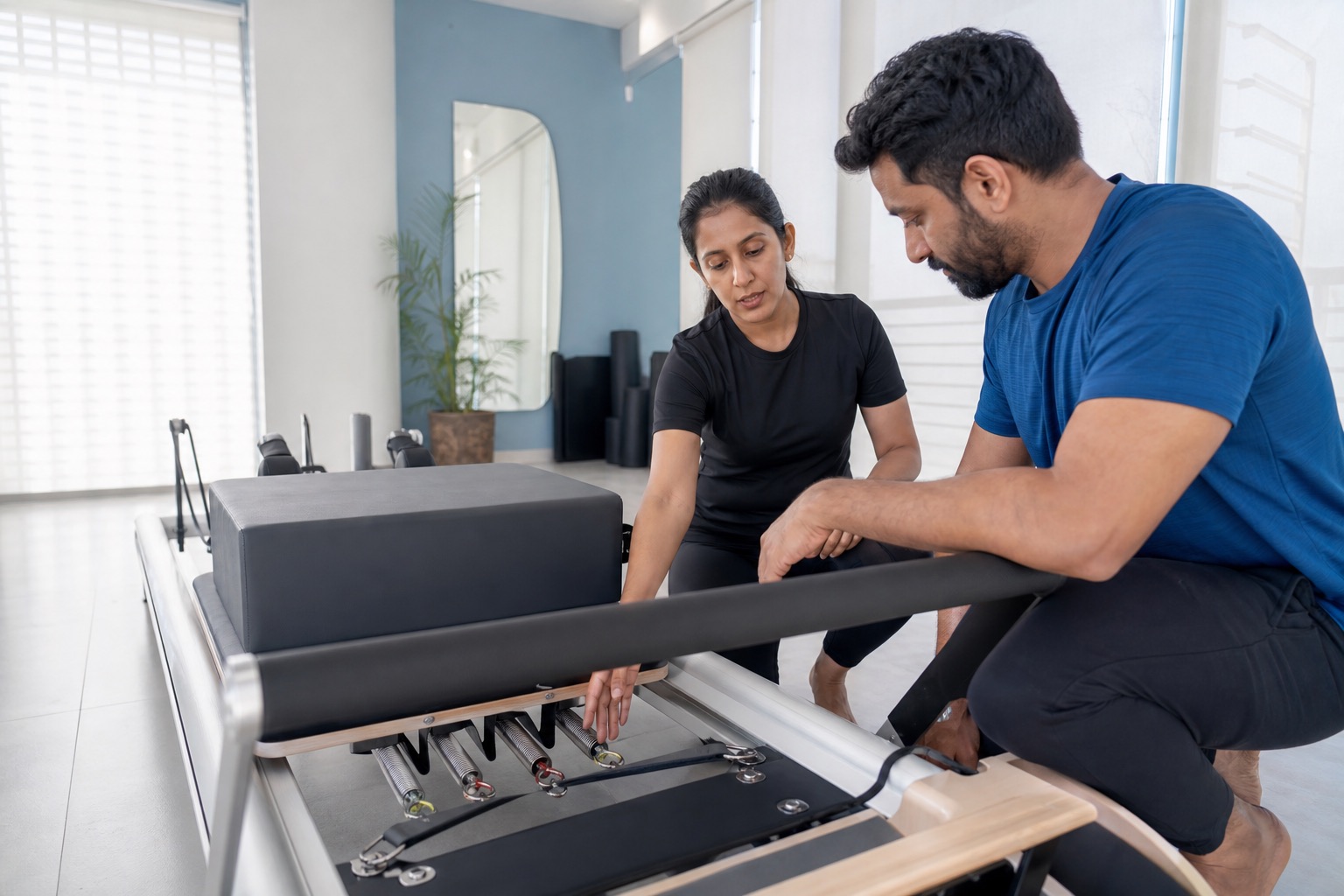
Equipment-based Pilates can use a moving carriage, springs, straps and a footbar. The moving carriage is often called a Reformer. Its setup can add resistance, provide support and adapt an exercise to the person.
The Reformer has a padded carriage that rolls along rails. Springs connect the carriage to the frame. Their tension can make a movement more demanding, but springs can also help support a movement while you learn its path.
A footbar gives the hands or feet a stable surface to press against. Straps connect to pulleys and can be held in the hands or placed around the feet. Shoulder blocks help position the body on the carriage. The instructor chooses how these parts are used for the exercise in front of you.
Mat Pilates is performed mainly on the floor using body weight and small props. Reformer Pilates adds feedback from a moving surface and adjustable springs. Neither is automatically better. The useful choice depends on your goals, experience, access and whether equipment support helps you move with more control.
A sliding platform that asks you to control both effort and return.
Adjustable resistance or assistance selected for each exercise.
A stable contact point for pressing through the hands or feet.
Pulley-based handles and loops used for arm and leg sequences.
Inside a private session
A responsible session starts with context, introduces the equipment, then changes one variable at a time. You should understand what you are doing and be able to communicate throughout.
Share your goals, previous exercise, current symptoms and anything that may affect movement.
Learn safe entry, carriage control, spring changes, straps and footbar position.
Practise a short sequence with cues, rest and resistance changes as needed.
Discuss what felt clear and choose a sensible direction for future sessions.
Choosing the right route
When you want one-to-one, equipment-based exercise for strength, mobility, control and a consistent movement practice.
If pain, injury, pregnancy, postpartum recovery, recent surgery or a health condition changes what is safe. Clinical Pilates at Lyxaa begins with physiotherapist-led suitability screening.
If you have unexplained symptoms, chest pain, dizziness, a new medical diagnosis or medical advice that limits exercise.
Position, range, pace, repetitions and exercise choice all matter. More resistance is not the same as better movement.
Continue with context
Regular Pilates · Kozhikode
Regular Pilates at Lyxaa is planned as one-to-one instruction. Sessions are opening soon.